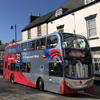
Ironically, the success of the free bus pass scheme is part of this problem. When it was introduced in 2008 the passenger numbers on some routes went up by almost 300%, but while that is good for the bus operator it wasn't good for the Councils as they must foot the bill. Councils are obliged to reimburse the bus companies when free passes are used, so while increased numbers on one route is to be welcomed for that route, if the extra numbers are made up by free pass holders it takes money out of the Council pot that could support other routes. Because of this we see strong routes getting stronger and making bigger profits for the operator, while weak routes fade and die.
Councils are not obliged to give free school travel to (most) children, or directly support bus routes by subsidies, so those are areas they can make savings. Free travel for school children has all but vanished now, just ask any parent paying £15 per week per child for a bus pass, and while subsidised bus routes have survived a bit longer they are fast heading the same way.
A strong route with a healthy mix of fare paying passengers and free pass holders and may well survive without the free bus pass money, just with a lower profit margin. In an ideal world that money could be used to support routes that are at risk, but the Council have no choice as the law says they must pay operators when people use their pass. Why don't the bus companies divert the money I hear you all ask? Well two reasons, firstly they want to make money for their share holders as we all know bus companies are not charities, but also the law says they can't even if they would wish to. That would be unfair competition as it could prevent another operator competing on the same route. For example, First cannot use money made on the 144 or 35 to keep the 53 going as that would be an unfair advantage over Astons who may wish to bring back their 382. As a result of deregulation and privatisation in 1986, each route must be economically viable to ensure fair competition between rival operators.
Every now and then we hear rumours that the free bus pass scheme is going to end because it is costing too much. That is a real minefield and potentially an act of political suicide for any government brave enough to kill it off. There are many people who totally rely on their pass and would really struggle without it, but there are also many people who abuse them, and that is what needs to be addressed.
I don't have the answers, I'm just a steering wheel attendant, but it really annoys me when I see someone running for the bus only to use a free pass to go one stop. If they are fit enough to run for the bus they are fit enough to take a steady walk to the next stop, and save the Council a bit of money that may help save the bus for someone who really needs it. And don't get me started on all the ones who just go the whole route and get off back where they started, or lend their pass out to their friends, etc!

One last point before I shut up... I've seen comments about how the withdrawal of an evening journey will impact on passenger numbers during the day. Yes, this is very true, but it's not that simple when you put numbers to it. Using the 17:50 Service 37 for an example, in April 2018 that journey carried an average of 5.9 passengers over the whole route each day. That clearly isn't enough to justify running the journey so it is withdrawn, and the harsh economic reality is that the company will save more money doing that than they will loose when those 5.9 people don't use the bus to travel in the other direction earlier in the day. Especially if some of those 5.9 people only make a short journey or use a free pass.
Not my intent to defend cuts to any bus service, just trying to help people understand why they happen.
 also think of all you bus drivers that will have hours cut so this will affect everyone surely