Service 118: Service History
Page Content
Service 118 (1920–1925)
Operated by Birmingham and Midland Motor Omnibus Company Limited
In the early 1920s, Birmingham and Midland Motor Omnibus Company Limited (BMMO—Midland “Red” Motor Services) ran a group of Friday Market Day services in Newport, Shropshire. The exact date these new routes first ran is unknown, but it is likely they started on or shortly after the new depot on Ditherington Road was open in November 1920.
Newport Market Day routes ran as following…
- Service 118: Shrewsbury, Wellington, Trench and Newport
- Service 118A: Woodseaves and Newport
- Service 118B: Edgmond and Newport
These services were only operated on Friday, and it is evident from the timetable that only one bus was used, running out of Shrewsbury depot.
These routes were renumbered on Saturday 16th May 1925, as part of BMMO's new simplified route number sequence. Route numbers in the range 620–639 were allocated to the Oakengates and Wellington area and the Newport Market Day routes became Service 630, Service 632, and Service 633, respectively. Additional Newport Market Day routes were added at about the same time as Service 631 from Wheaton Aston and Service 634 from Bishops Offley.
Service 118 (1925–1928)
Operated by Birmingham and Midland Motor Omnibus Company Limited
With the introduction of the new simplified route number sequence on Saturday 16th May 1925, Birmingham and Midland Motor Omnibus Company Limited (BMMO—Midland “Red” Motor Services) allocated route number 118 to the Birmingham and Romsley corridor, which had previously run occasional journeys as Service 31.
This route continued to operate as Service 118 until BMMO's second renumbering exercise, which took place on Saturday 11th February 1928. At this time the Birmingham and Romsley route became Service 136.
| 1 | 1 | 8 |
Timetable Archive
| November | 1927 | Birmingham ↔ Bearwood ↔ Halesowen ↔ Romsley | Withdrawn Feb 1928 |
Service 118 (1928–1973)
Operated by Birmingham and Midland Motor Omnibus Company Limited
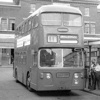
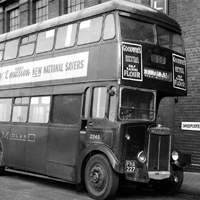
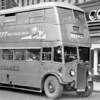
On Monday 1st January 1912, Birmingham Corporation took control of all tram operations within the Birmingham City boundary, and were soon in the process of obtaining an Act of Parliament to also take control of omnibus operations wholly within their area. With the pending loss of some of their most important routes BMMO needed to find a new source of revenue and looked to introduce a new network of routes into Birmingham from locations outside of the City boundaries, which it was permitted to do on condition that it charged protective fares.
The first of these new routes was introduced on Wednesday 24th December 1913, running between Birmingham City Centre, Perry Barr, Great Barr, and Walsall, as Service 30. On Saturday 16th May 1925, BMMO stage carriage services were renumbered into geographical groups, with services into Birmingham being in the range 101–211 (numbers 1–100 were left open for Birmingham Corporation). At this time, the Birmingham to Walsall route was renumbered to become Service 113, then on Saturday 11th February 1928, BMMO again renumbered their network and at this time the route would change to Service 118.
Following an Act of Parliament in 1916, Walsall Corporation had control of all bus services within their territory, and thus BMMO were required to reimburse the Corporation for the section of the route between Great Barr and Walsall. Between 1916 and 1919 (while operated as Service 30) the reimbursement was fixed at £300 per year, then from 1919 after renegotiation the reimbursement was dependant on the total number of miles operated. The agreement changed again in 1933, and from this time Walsall Corporation set fares in line with other services in their area, and collected the receipts, then reimbursed BMMO based on the amount of miles operated.
Service 118 was one of the busiest routes on the BMMO network with an afternoon to early evening frequency of every 3-minutes during the Second World War, operated entirely with double-deck vehicles. Additional short-working journeys were operated as Service 119 between Birmingham and Great Barr (Scott Arms) during the evenings and during peak times as and when passenger numbers required the extra capacity.
After the War the overall number of journeys reduced to run every 6-minutes Monday to Friday, or every 5-minutes on Saturdays during the afternoon and early evening period, and between every 7 and 10-minutes at other times of the day. A regular timetable for short-working variation Service 119 was introduced to give extra capacity between Birmingham and Great Barr, and in addition All Night Service NS119 was introduced running hourly over the Service 119 route from 23:30 in the evening to 05:00 the following morning with a Minimum Fare of 6d. Operation of short-working variation Service 119 passed to Birmingham City Transport (BCT) in 1958.
In July 1968, following a disagreement between BMMO and Walsall Corporation over reimbursements for the section of the route in the Corporation's territory, Service 118 became a joint operation between BMMO and Walsall Corporation Transport, with the Corporation operating 39.5% of the total mileage. This arrangement lasted for less than 18-months as the business and operations of Walsall Corporation Transport became part of West Midlands Passenger Transport Executive (WMPTE) at formation on Tuesday 1st April 1969, with operations commencing on Wednesday 1st October 1969.
Service 118 was operated jointly by BMMO and WMPTE's Northern Division until Sunday 2nd December 1973, then from the following day WMPTE took control of all BMMO services operated wholly within the West Midland area. In 1975, WMPTE renumbered Service 118 to Service 51.
More details about BMMO Transfer of Services and Assets to WMPTE can be found here… Midland “Red” History: Transfer of Services and Assets to WMPTE.
Route Summary
- Feb 1928–Dec 1973
- Birmingham (New Street) 1
- Perry Barr
- Great Barr (Scott Arms)
- Walsall
1 From c. 1943, at certain times of the day Service 118 would depart from Lench Street in Birmingham.